
Wedding photography gear.
What’s in the camera bag?
It’s a question I get all the time. What camera is that? What lens do you use? Well, this is all for you.
Typically on a day, i’ll run 2x camera bodies, one with a 35mm lens, the other with an 85mm. This combo covers 95% of a wedding day, with longer or shorter lens’ kept in my bag just in case.
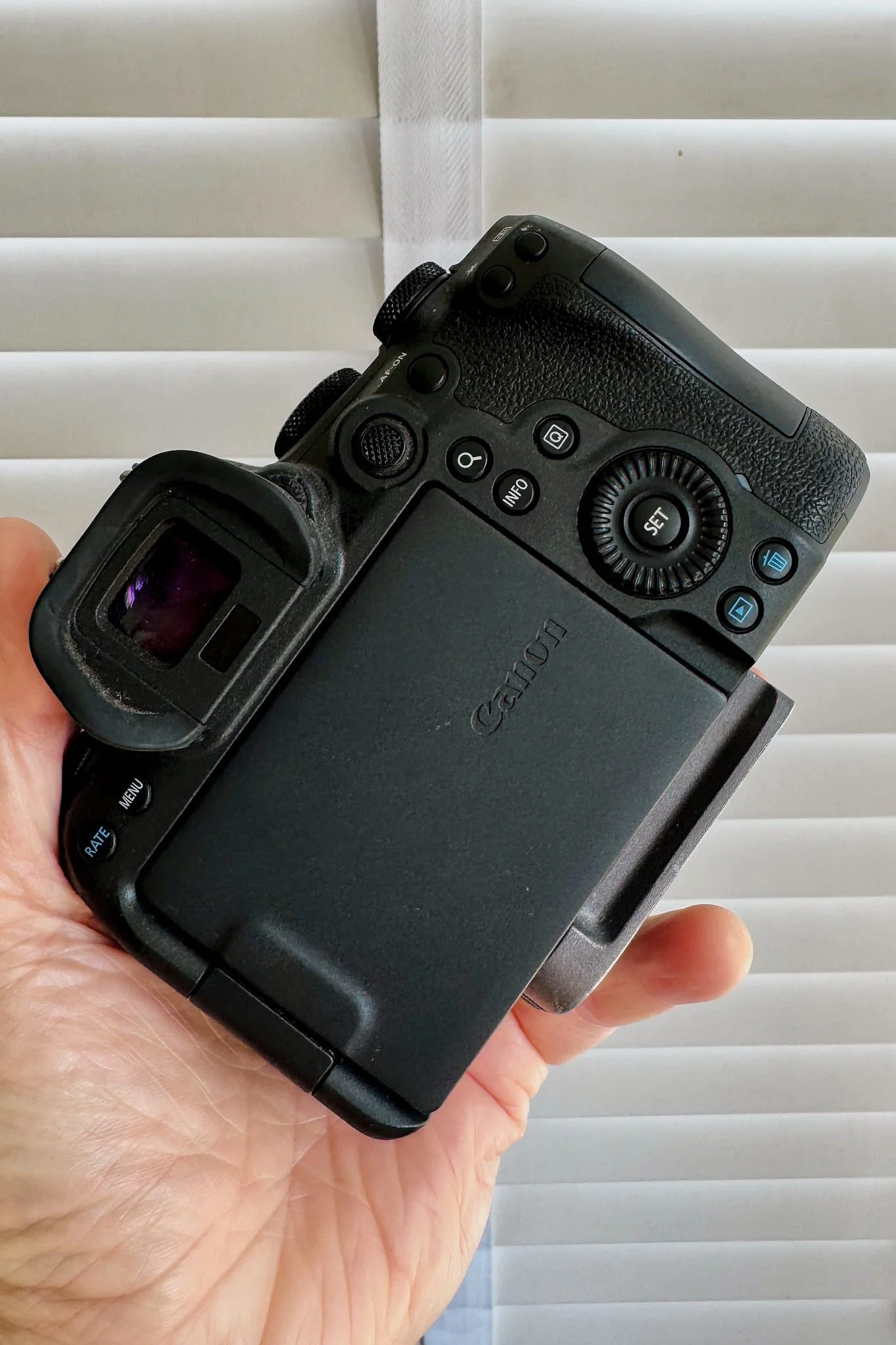
Canon R6 Mk2 (x2)
This is my camera of choice. Solid and reliable Canon build quality, with great battery life and swift, accurate autofocus. I use two of these on a day, usually with a 35 and 85 lens combo. The high ISO capability of these cameras is amazing, and shooting at ISO’s at or above 6400 is no longer an issue. Compared to my previous digital SLR’s, these new mirrorless cameras are incredible. I shoot in compressed RAW, and usually in aperture priority mode, auto ISO.
24.1 mega pixel full frame sensor.
12 frames per second (mechanical) or 40 frames per second (electronic shutter).
Weather sealed
Good battery life (I typically do 4 batteries in one full-day wedding)
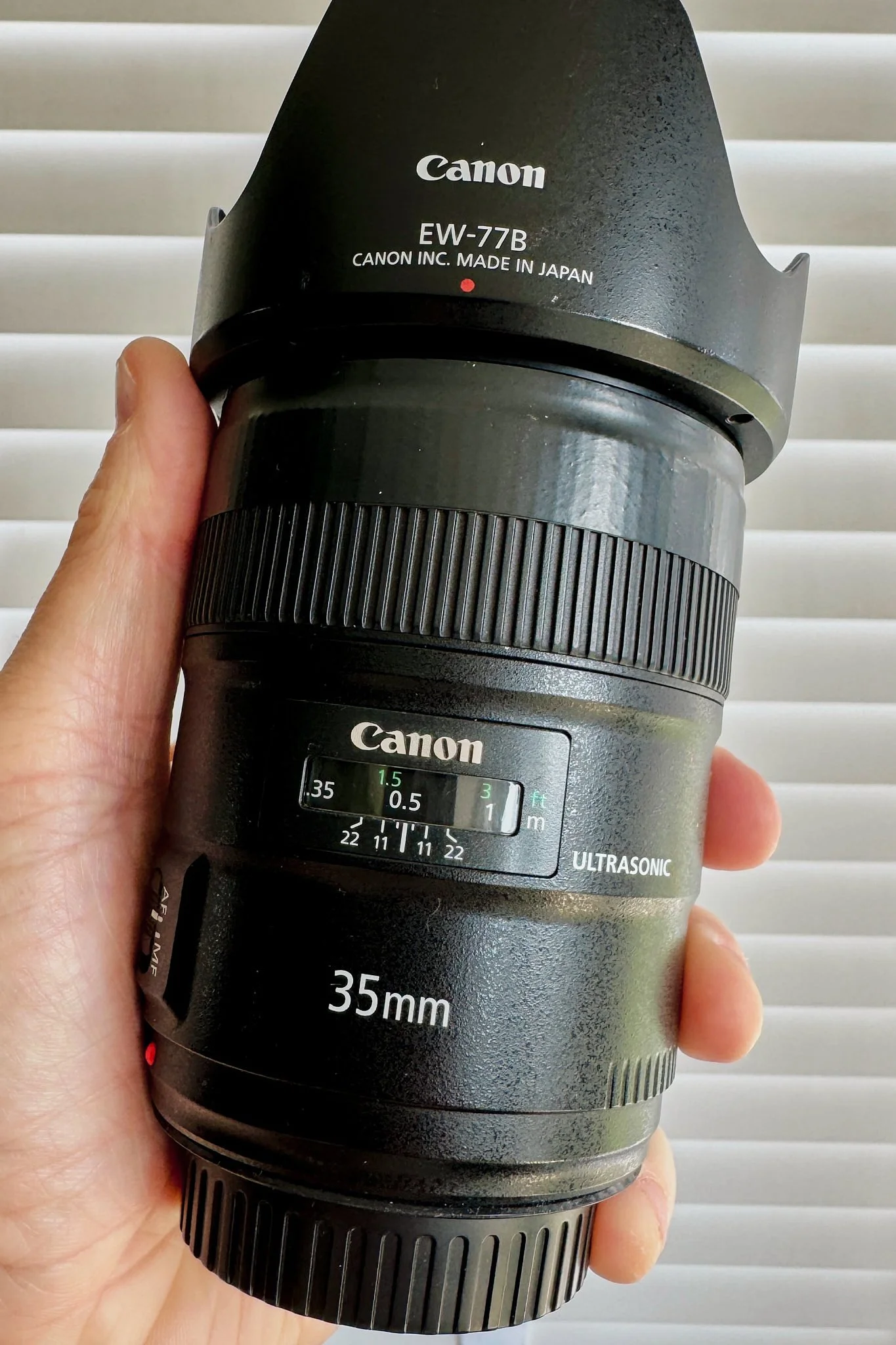
Canon EF 35mm f1.4L mk2.
I cannot tell you how much I love the 35mm focal length. It’s the closest thing photography has to the human eye, not in terms of field of view exactly, but in how it feels. It's wide enough to give context and place your subject in their environment, but tight enough to stay connected to them. It doesn't distort like a 24mm or compress and flatten like a 50mm. I love it because it puts you physically close to your subject, which gives intimacy and presence in the frame. It’s also great for environmental shots where the person and their surroundings tell the story together. It just looks... natural.
The mk2 version of this lens is razor sharp wide open, and its auto focus when paired with mirrorless bodies is rapid and accurate.
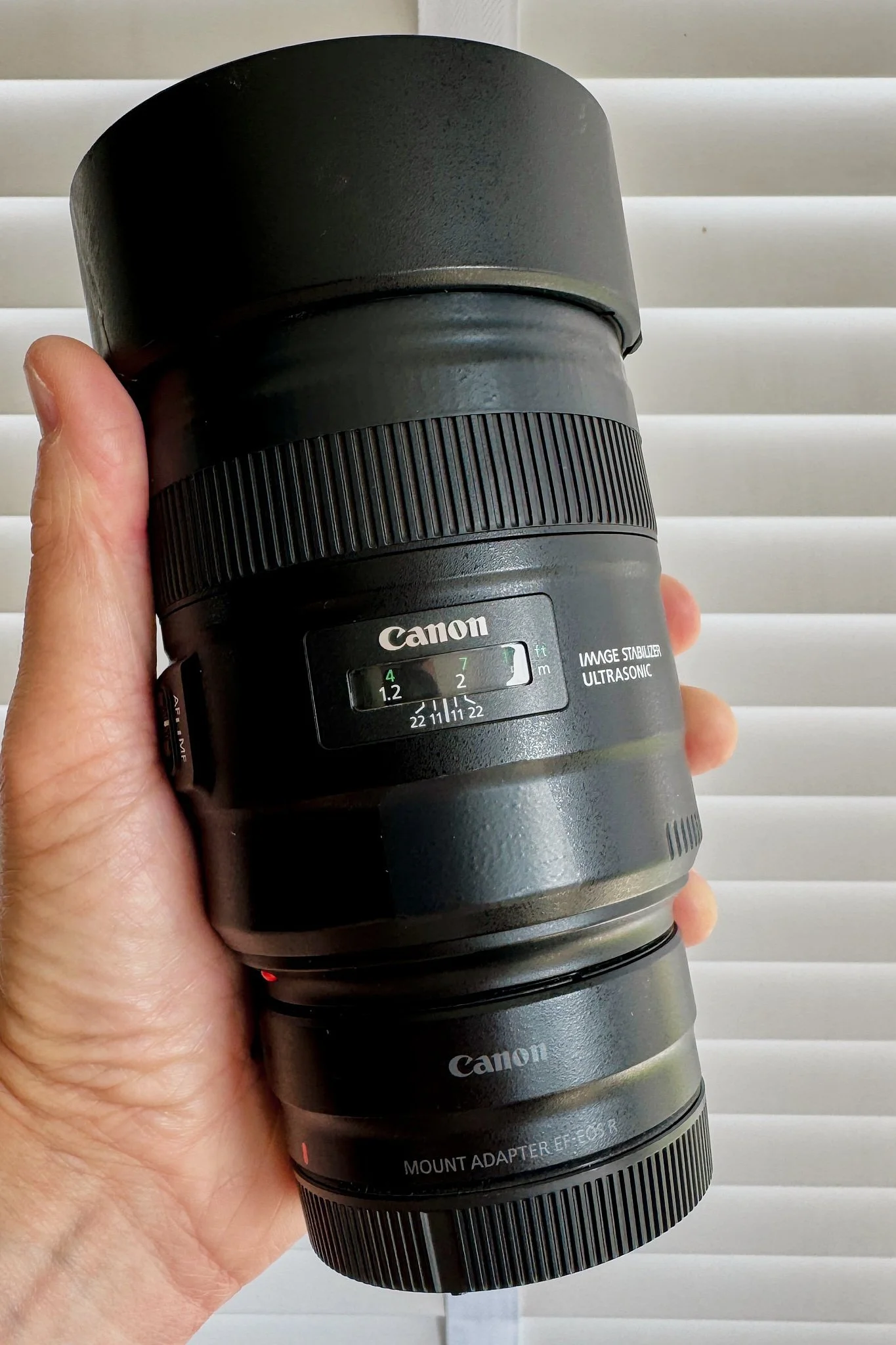
Canon EF 85mm f1.4L IS.
I tried the f1.2L and found in too slow to focus and inaccurate. I tried the f1.8 which was super fast and much lighter, but wide open it had really bad purple fringing. I was then introduced to the 85mm f1.4L IS and I haven’t let it go since!
The 85mm focus length is a classic pairing with a 35, meaning I can get tight when needed. It’s great for creative portraits, and wide open into the sun it makes for brilliant sunset images.
Wide open, it’s nine-blade aperture produces bokeh that's smooth and rounded, close enough to the f/1.2L to be indistinguishable in a finished image, but without the sluggish focus that made the f/1.2 a pain to work with at a wedding.
It’s weather-sealed and has Image Stabilisation, both of which come in handy in poor weather and dimly lit churches!
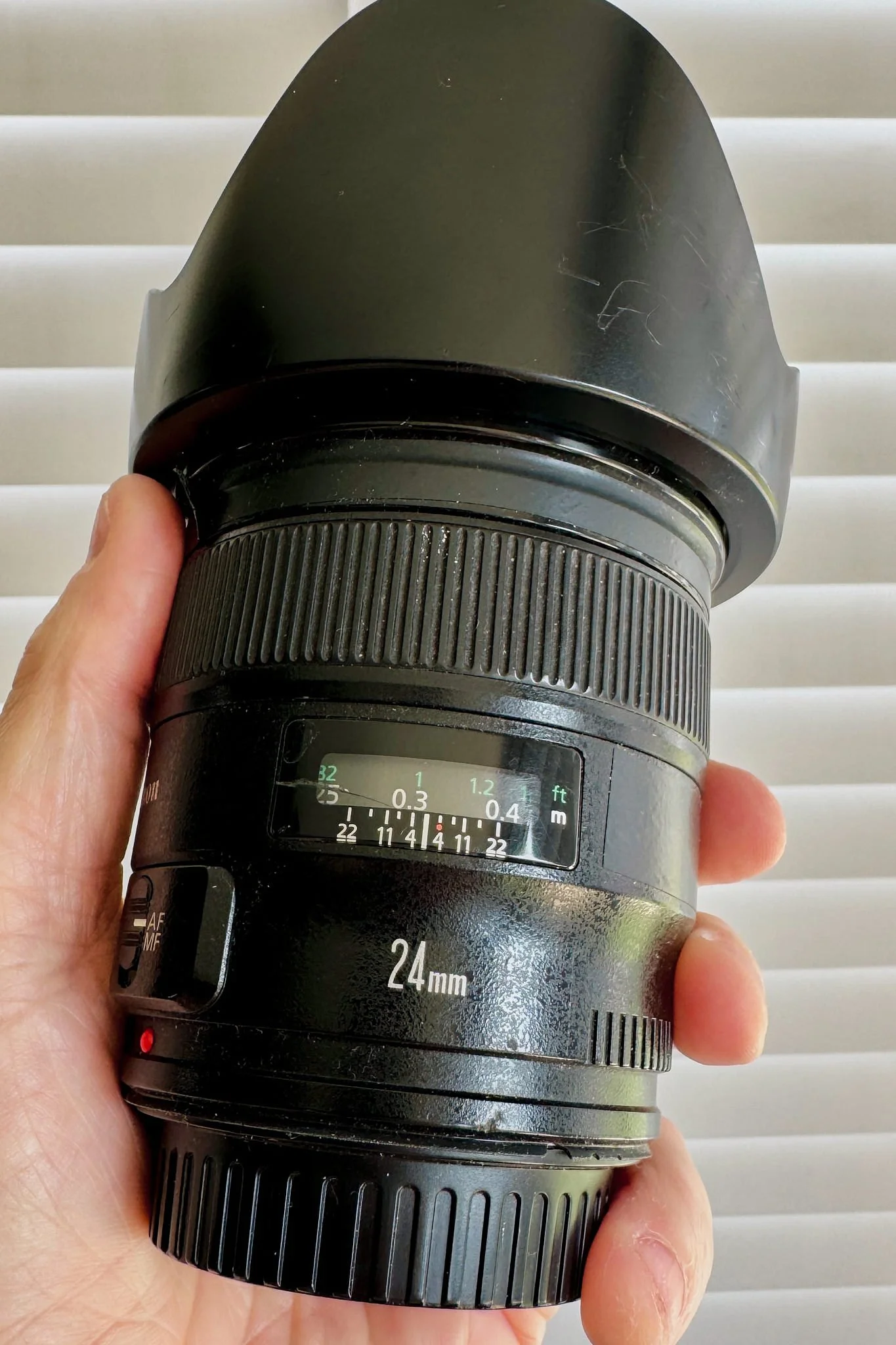
Canon EF 24mm f1.4L mk2.
24mm is my ‘wide angle’. It’s a solid lens that has had a good life in many weddings and events over the years. This is an older lens that you can get pretty cheaply now, but works with modern mirrorless bodies very well indeed, especially with the RF-EF adaptor.
At f/1.4 on a 24mm, you're pulling in enormous amounts of light while keeping the whole scene in frame. That makes this ideal for dark churches, tight rooms, and big group shots where I can't physically step back any further.
Wide open it's not clinically sharp in the corners, but that's not what 24mm is for. It's an environmental lens, placing people in their surroundings, telling the story of the room, the light, the moment. Stopped to f/2 the sharpness snaps into shape across the frame.
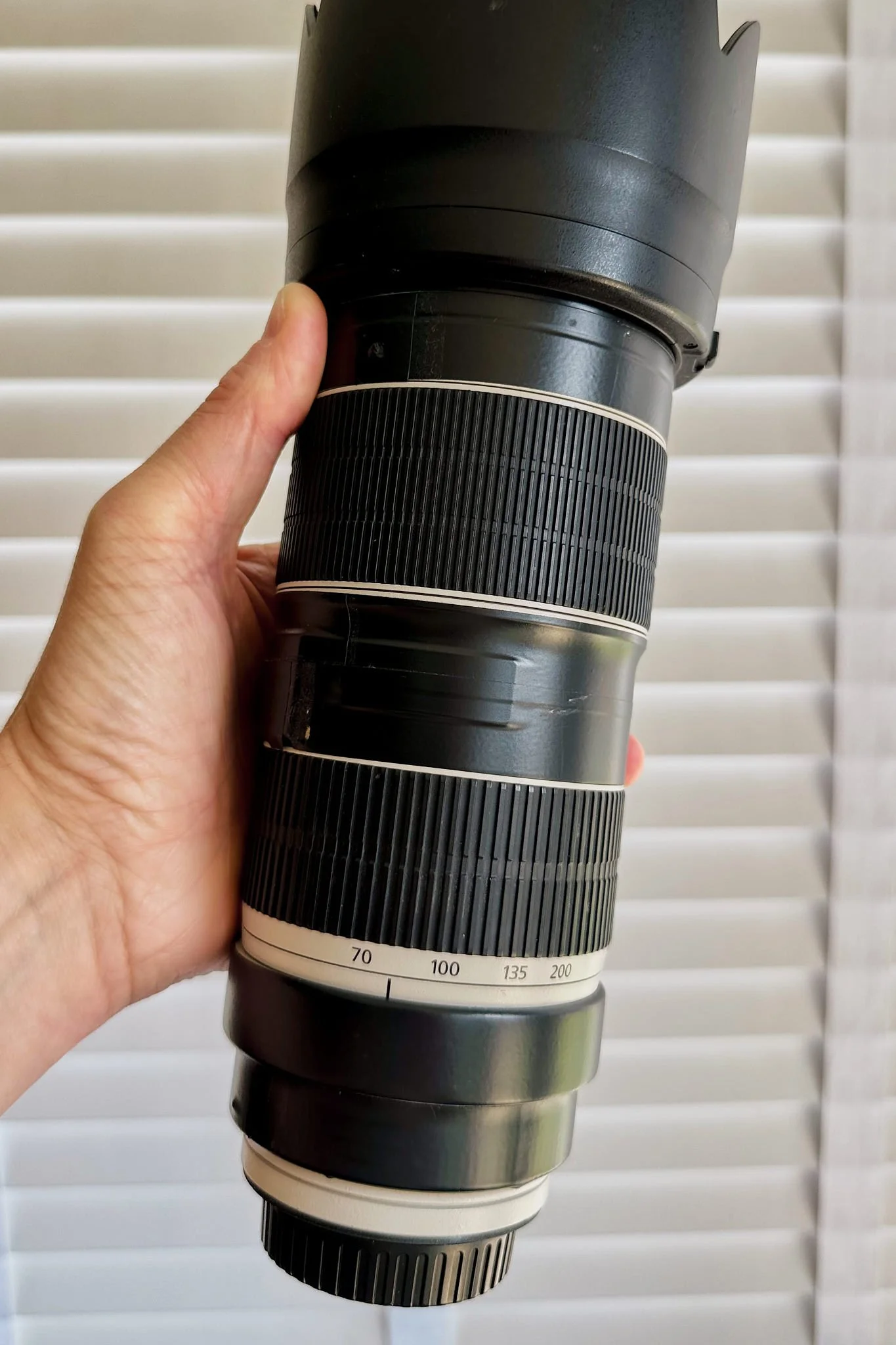
Canon EF 70-200mm f2.8L IS mk2.
Ask any events photographer about an ‘essential’ lens, and the 70-200mm will nearly always be the answer. My one has had a great life, shooting events all over the UK. It’s rock solid, super versatile and never lets me down.
Despite it’s size, it’s the lens you don't notice — and that's the point. I can be standing at the back of a long aisle capturing the moment the doors open, completely invisible, while the 35mm on the other body covers the guests. Wide open, it throws backgrounds into a smooth blur, which makes it awesome for portraits. The subject pops, the world behind them melts! It also doubles as a reportage tool; the reach lets me observe rather than participate, which is exactly where candid photography lives. Yes, It's heavy, and you know about it by the end of a long day, but the images it produces make that worth it.
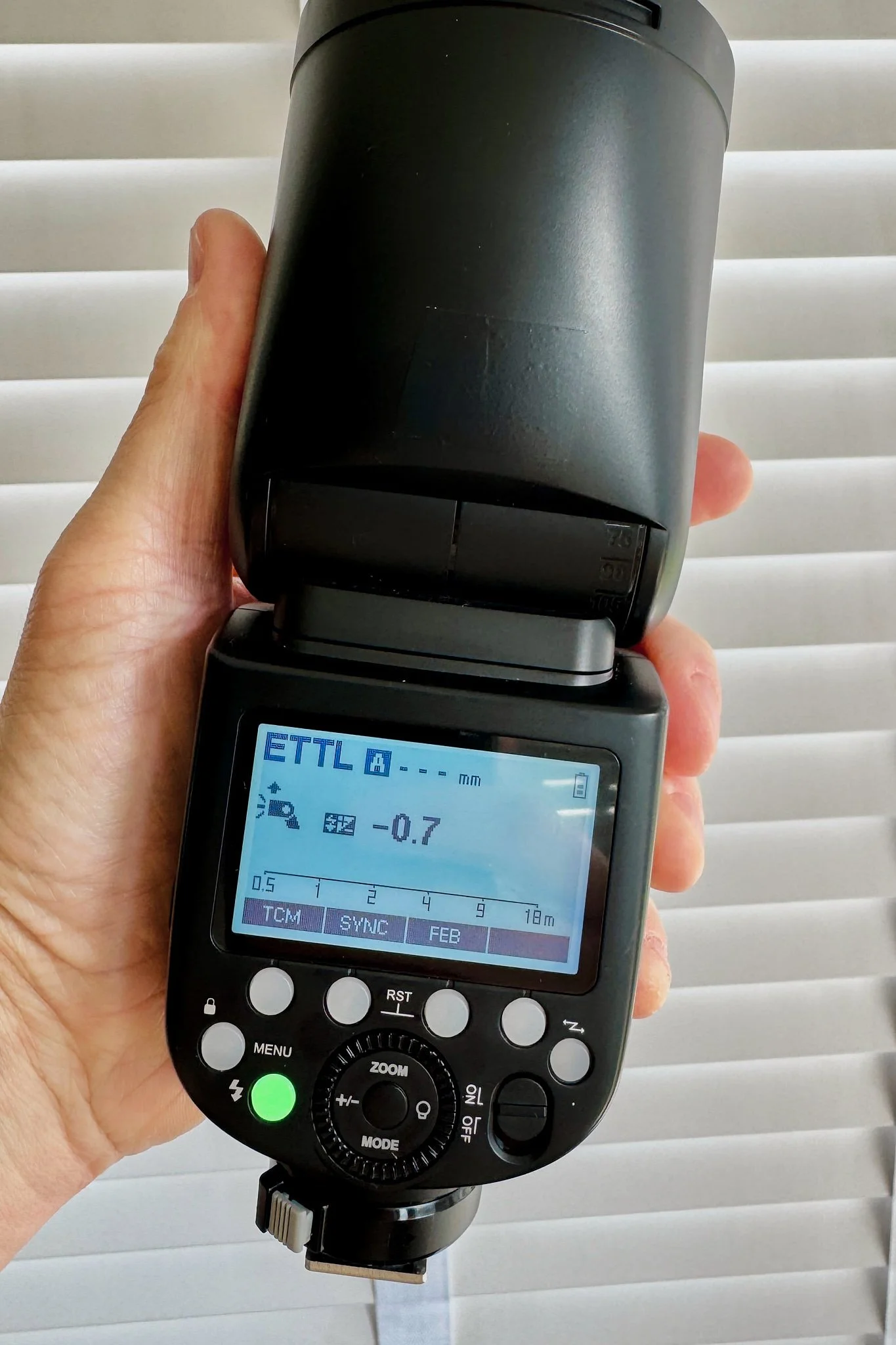
Godox V1 Flash (x2)
Ever wondered how people get those epic dance floor photos, or gorgeous backlit images? Chances are a flash of some sort was involved.
Godox have made some brilliant flash’s and the V1 is no exception. I carry 2, usually bouncing the light of a nearby wall or triggered by a wireless remote with the flash guns on stands.
A traditional rectangular flash throws light in a hard, square pattern, whereas these have circular head which spreads it more evenly in all directions, which means bounced light wraps around a subject rather than hitting one side harder than the other. The result is softer, more natural-looking flash, less "lit by a camera," more "lit by the room."
These flashes recharge quickly, and the batteries are good for 2-3 weddings between charges.
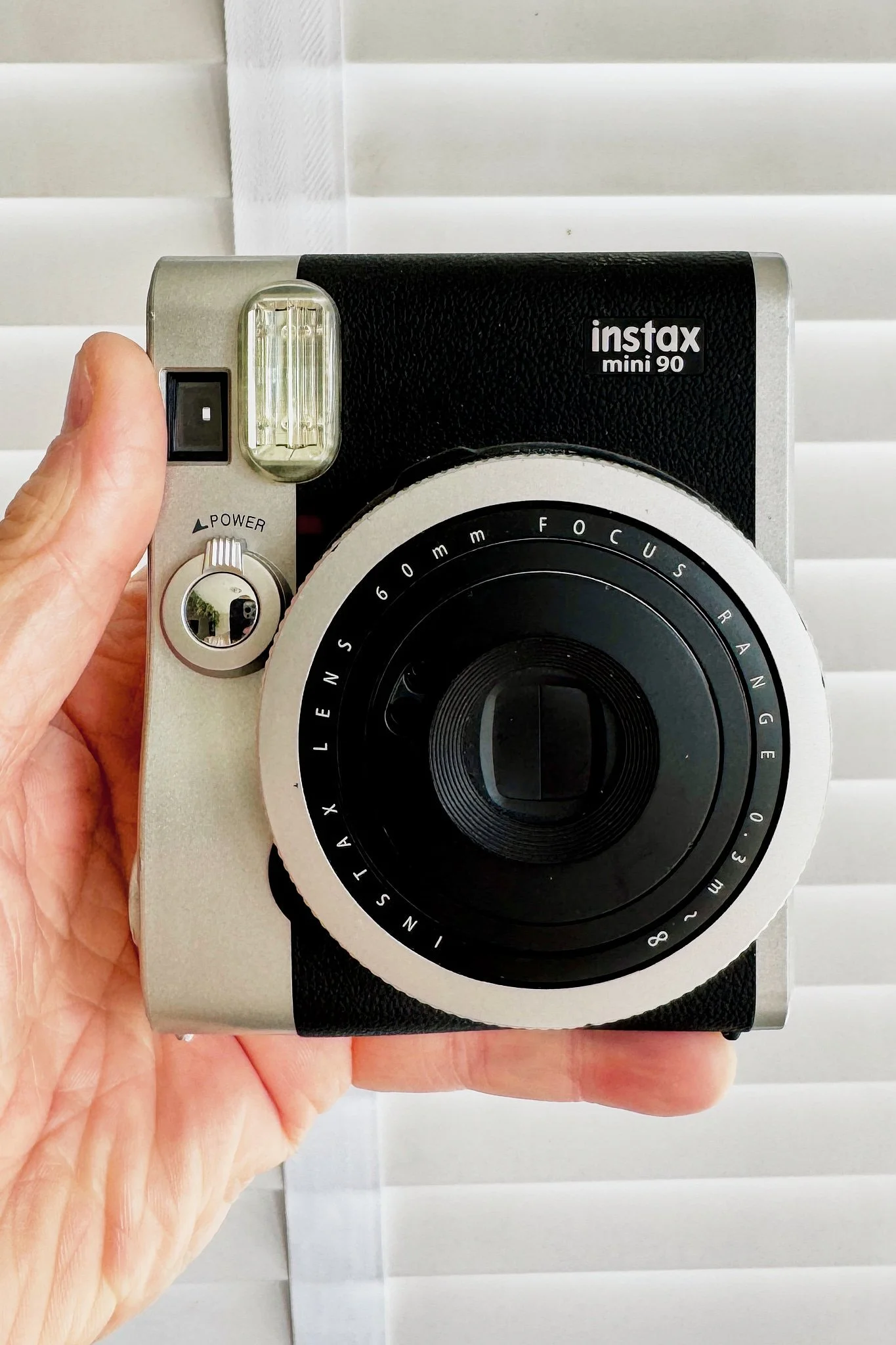
Fuji Instax Mini 90 / 99
These are so much fun. I can’t tell you in words how much I enjoy shooting with these. Typically on a wedding day, i’ll shoot 20 or so frames with this, especially for little groups.
Load the film pack, turn it on and you are good to go. Simply aim, click the shutter and enjoy the photo coming out of the top. These look retro, and the images give a really nice retro vibe. It’s just fun fun fun.
Word of advice - don’t drop them. They are not as tough as I’d like, and the film door clips have a habit of breaking off. There is no replacement when this happens!
Grab film in packs of 20 shots off Amazon and you’re good to go. Get one. You’ll love it.
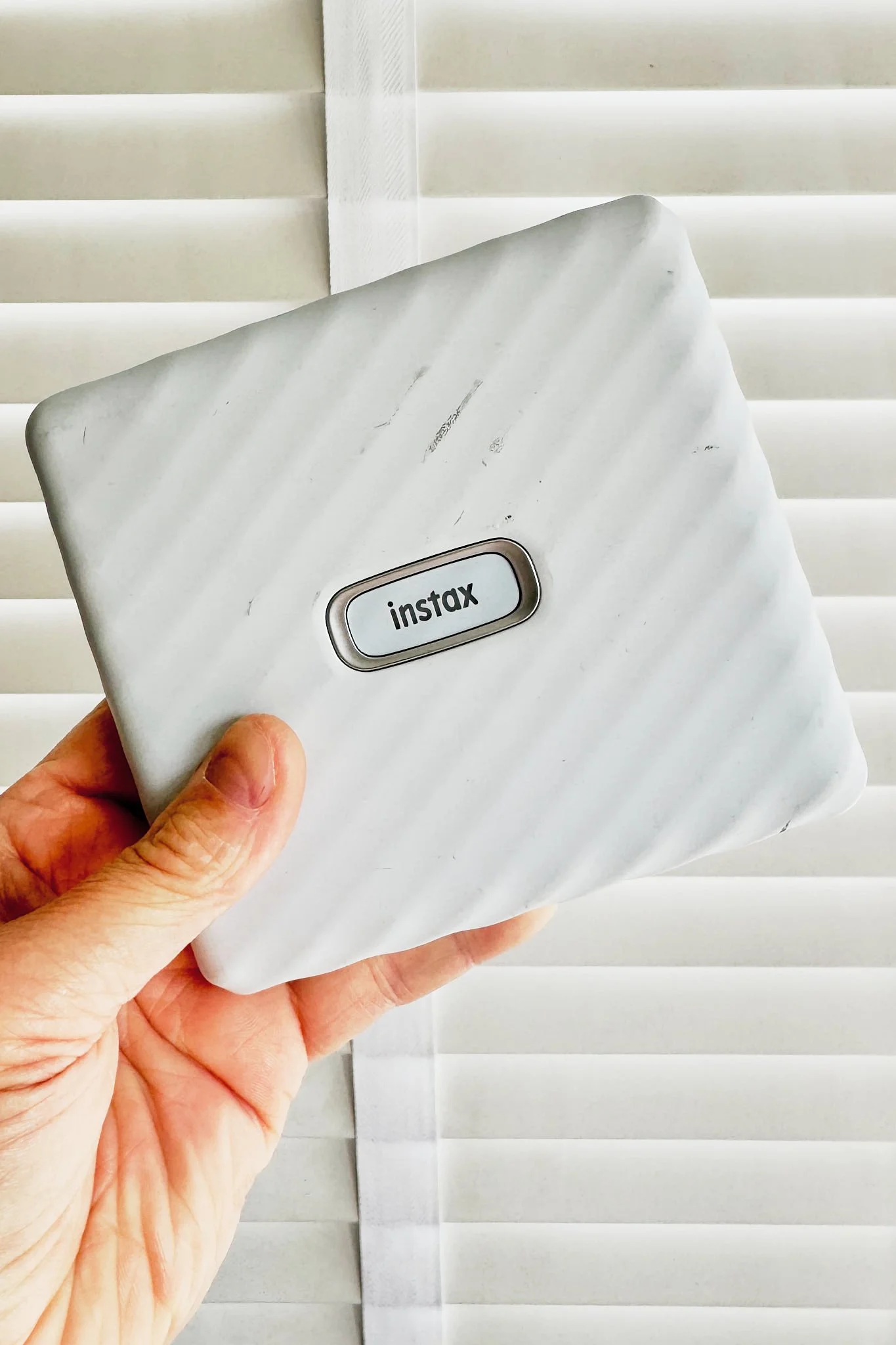
Fuji Instax Link Wide Printer
What’s this? An Instax printer? Oooooh yes!
This little gadget, powered by a rechargeable battery connects to my phone via the Fuji App. I can then send the printer any image I like, and it prints it on a wide Instax photo. It’s that simple.
Typically during a break in the day, i’ll pick a few images from the day on my camera and send them to my phone. I then give them a little edit to make them pop, and then send to print.
Print quality isn't gallery standard. It's warm, slightly soft, distinctly analogue, which is exactly the point. Think of it as a Polaroid for the digital age — instant, physical, handed directly to a guest.
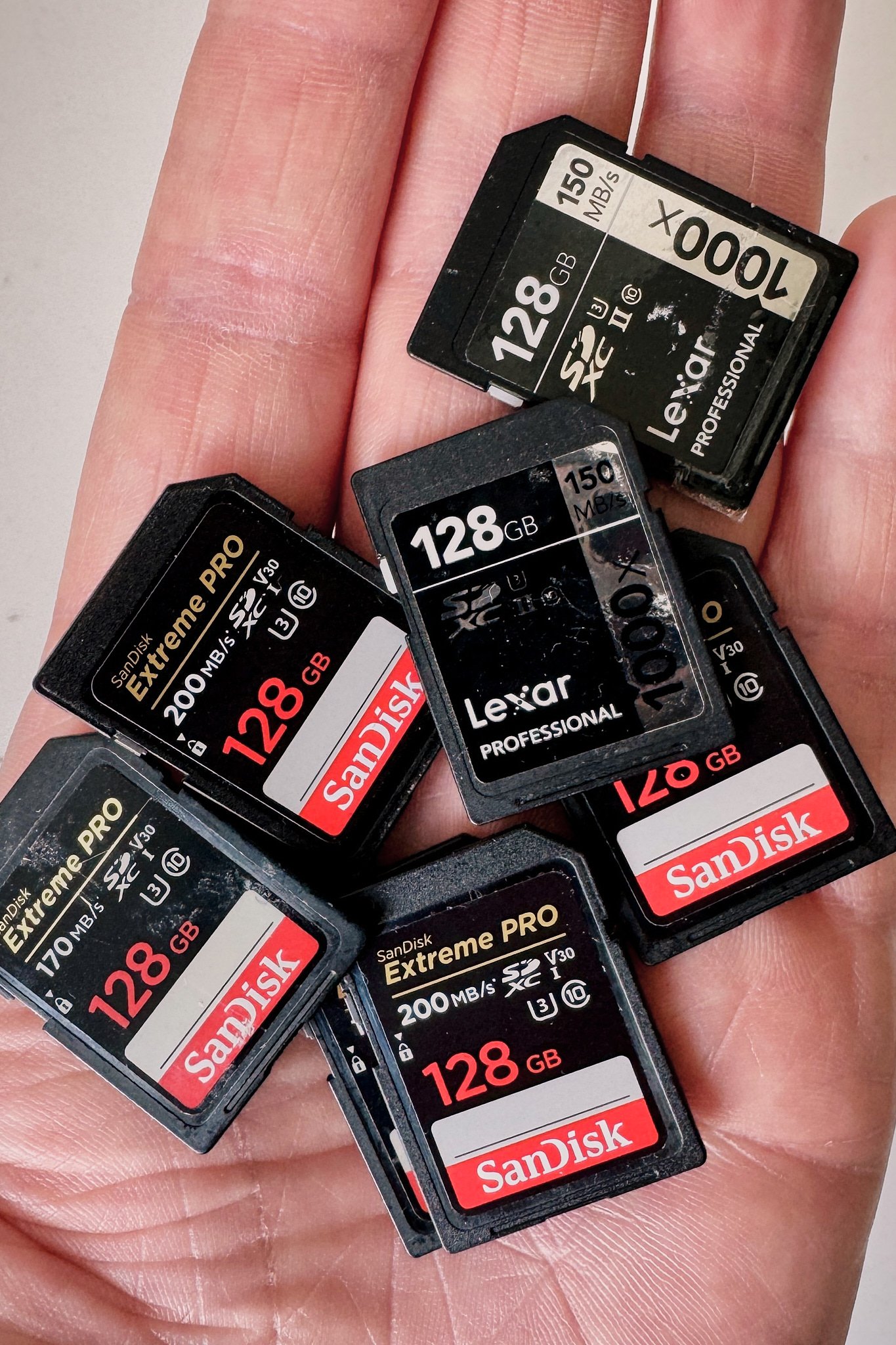
SD memory cards and backup plan.
All those images have to go somewhere!!
Here’s my backup plan, because you can’t re-shoot a wedding.
2 cards per camera, mirrored so that both cards have the same content (In case one card fails)
When finished, cards are copied to a working drive and an archive drive. Cards are securely stored.
Images are edited off working drive, backed up daily.
Once gallery is delivered to the couple, the SD cards are taken out of storage, formatted and put back to work!
Don’t skimp on cheap cards and only buy from reputable shops. I use Sandisk and Lexar.
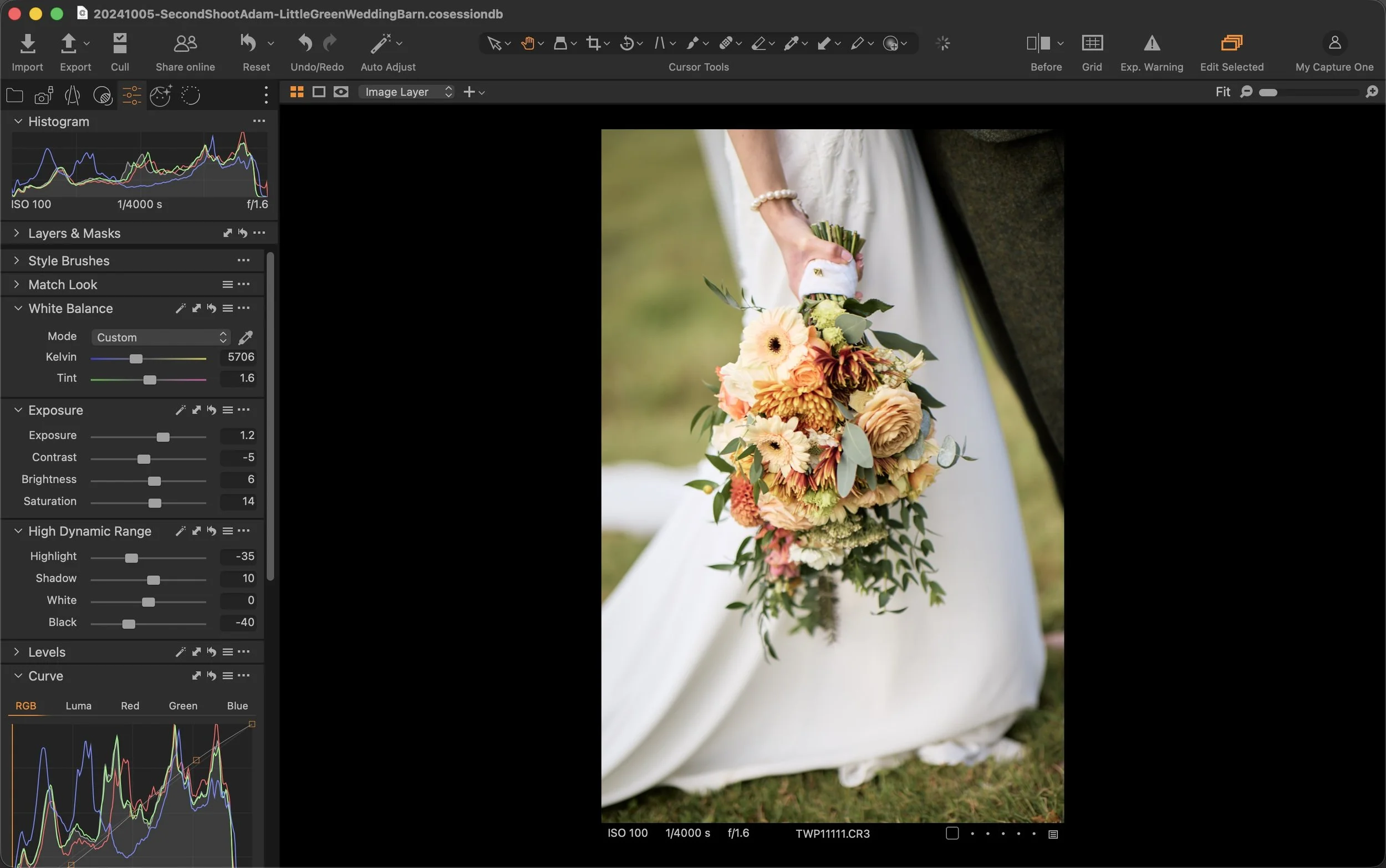
Capture One.
I use Capture One to edit the images into the finished product. You may have never heard of Capture One, but it’s been around since 2002. I switched from Adobe Lightroom and find it faster, more reliable, less computer hungry and easier to create the images I want to create.
Each wedding is turned into a ‘session’ and edited. No default ‘presets’ are used as every wedding is different. Turnaround typically takes 3-5 weeks, with some full-day weddings having 1000+ images uploaded to the digital gallery.


Knowing what questions to ask a wedding photographer is the difference between booking with confidence and hoping for the best. Most couples spend more time researching a new sofa than they do vetting the person who'll document one of the most significant days of their lives. This page is here to change that. Below are the eight questions that matter most — and exactly how I answer them.